How to Choose Salsa Dance Shoes for Women: Heel Height, Suede Soles, and Fit
There is a moment most followers remember: the first social night in real dance shoes. Turns that used to stick suddenly finish clean. Your weight sits where your teacher kept telling you it should. And for the first time you leave the club with your knees, not your feet, deciding when it is time to go home.
Street shoes can get you through your first few classes. But once you are dancing a couple of nights a week, the right shoe stops being a luxury and starts being part of your technique. This guide walks through what actually matters when you shop, in the order it matters.
Start with the sole, not the style
The single biggest difference between a dance shoe and a pretty shoe is the sole.
Suede soles are the standard for salsa. Suede grips enough to keep you stable on a basic step but releases easily when you pivot, which is exactly what spins need. Rubber soles do the opposite: they grab the floor, your foot stops, your knee keeps going, and that is how dancers get hurt.
A few practical points:
- Suede works best on wood and smooth studio floors. On sticky or dirty floors it clogs quickly, which is why dancers carry a small wire shoe brush.
- Keep them indoors. One walk across a wet parking lot can ruin suede. Change into your dance shoes at the venue.
- Some shoes use harder leather or "dance sneaker" split soles. These are useful for practice on rough floors, but most followers prefer suede once they are spinning regularly.
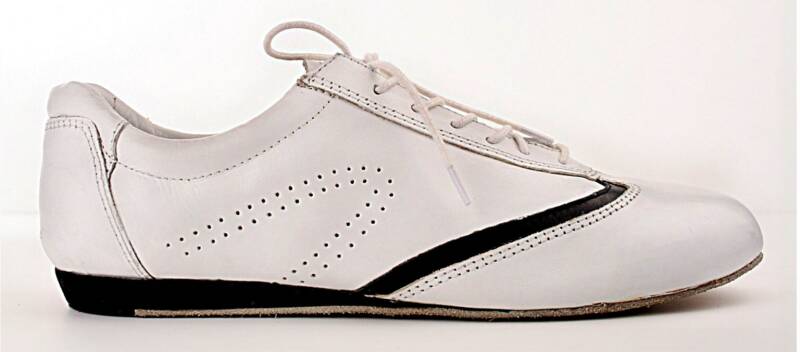
If a shoe looks great but has a rubber or plastic street sole, it is not a salsa shoe, no matter what the listing says.
Heel height: lower than you think
It is tempting to buy the tallest heel in the shop. Resist that, at least for your first pair.
- 2" to 2.5" (5 to 6.5 cm): the sweet spot for most beginners and many experienced social dancers. Enough lift to keep your weight forward over the balls of your feet, low enough to stay stable through turns.
- 3" (about 7.5 cm): the classic Latin performance height. Beautiful lines, but it rewards strong ankles and good balance. Many dancers wear these for performances and keep a lower pair for long social nights.
- Flat or practice heels: great for drilling footwork and shines, and kind to your feet during long workshops.
Heel shape matters too. A flared or wider heel gives a bigger base and is noticeably more forgiving than a thin stiletto-style heel. If you are between two pairs, choose the more stable heel.
Open toe or closed toe?
Both work. The choice comes down to the floor and your own comfort.
Open-toe sandals are the most common salsa style. They are light, flexible, and let you feel the floor. Your toes may sit right at the front edge; on a well-fitted Latin sandal that is normal, but you should not be hanging over it.
Closed-toe shoes protect your feet on crowded floors, where a stray heel from another couple is a real risk. Many followers like a closed toe for big congress socials and an open toe for smaller studio nights.
Straps hold the shoe on your foot, so treat them seriously
When you spin, your foot pushes against the straps, not just the sole. Loose straps mean the shoe shifts, and a shifting shoe throws your balance off.
- Ankle straps are the minimum. They should be snug without pinching.
- T-straps and cross straps add security across the top of the foot and are popular for faster turn patterns.
- Adjustable buckles are worth having, because feet swell over a long night.
Try the shoe on and do a slow pivot in the shop. If your heel lifts or slides inside the shoe, the fit or the strap design is wrong for you.
How a salsa shoe should fit
Dance shoes fit closer than street shoes. A good starting checklist:
- Snug, not tight. The shoe should feel like it is holding your foot, with no room to slide forward when you rise onto the ball of the foot.
- Shop later in the day. Feet are slightly larger in the evening, which is when you will be dancing.
- Sizing varies between brands. Many dance shoe makers use European sizing, and the same number can fit differently from brand to brand. Read each brand's size chart instead of assuming your usual size.
- Expect a short break-in. Leather and satin uppers soften with wear. Pain that does not ease after a couple of practice sessions usually means the wrong size or shape.
If you are buying online, look for retailers with simple exchanges. Sizing is the most common reason dancers send shoes back.
Satin, leather, or mesh uppers?
- Satin is classic and looks elegant, but it scuffs and stains more easily.
- Leather is durable and molds to your foot over time.
- Mesh and stretch fabrics breathe well and flex with the foot, which many dancers like for hot clubs and long festivals.
Neutral tones like tan or flesh colors visually lengthen the leg and match almost any outfit, which is why so many followers own at least one pair.
Where dancers usually buy
Salsa shoes come from a mix of dedicated Latin dance brands and general dancewear companies. Names you will often hear on the social floor include Very Fine, Burju Shoes, Capezio, and Bloch, along with many smaller and handmade labels.
Some of these brands come straight from the dance floor. Burju Shoes, for example, was started by Burju Perez, a professional salsa dancer who began by customizing Latin shoes for her teammates and grew it into a line focused mainly on women's dance shoes. That dancer's-eye view (comfort through a long social, straps that hold during spins) is exactly what you want from a salsa shoe. Congress and festival vendor rooms are a great place to try several brands on in one afternoon. Local dancewear shops are worth a visit too, especially for your first pair, when fit advice is valuable.
Price ranges vary a lot by brand and materials. A sturdy, well-made first pair does not need to be the most expensive option in the room; fit and stability matter more than the label.
Make them last
A good pair of salsa shoes can last years with simple care:
- Brush the suede with a wire brush when it starts to feel slick or sticky.
- Carry them in a shoe bag so the suede stays clean and the heels do not damage your other things.
- Replace heel tips when they wear down. A worn tip can make the shoe feel unstable and can scratch floors.
- Let them air out after a sweaty night before putting them away.
Common mistakes to avoid
- Buying the highest heel first and fighting your balance for months.
- Wearing suede soles outdoors.
- Choosing a pair because it looks good in photos, then discovering the straps do not hold your foot.
- Ignoring pain. Blisters and sore arches are signs to adjust the fit, not to "push through."
Your next step
Once your shoes are sorted, put them to work on the fundamentals. Practice your turns with our lesson on improving your salsa spins, and if you dance with a partner who is shopping too, send them our guide to the best salsa dance shoes for men. You can also keep drilling at home between socials with the Pocket Salsa app.
The right shoe will not dance for you. But it removes one thing that was holding you back, and that makes every class and every social night a little more fun.