How To Hear Salsa Beats Better: A Beginner-Friendly Rhythm Guide
If you have ever been told "just feel the music" and wanted to scream politely, this article is for you.
For many dancers, the hardest part of salsa is not memorizing combinations. It is hearing the rhythm clearly enough to stay calm and on time. The good news is that this skill is absolutely trainable.

Why beginners struggle with salsa timing
Salsa music is layered. You are not hearing one obvious metronome. You are hearing a conversation between instruments.
That means your ear has to learn two things:
- where the pulse lives,
- which instrument is easiest for you to follow first.
Start with these rhythm anchors
Conga tumbao
The conga pattern gives many dancers a strong groove reference, especially once they stop trying to count every subdivision.
Cowbell and campana sections
In louder arrangements, bell patterns can make the pulse easier to detect.
Clave (over time)
Clave is foundational in Afro-Cuban music, but beginners often force it too early. Learn to dance steadily first, then deepen into clave awareness.
A simple 10-minute rhythm drill
- Play one salsa song.
- Clap a steady pulse for 2 minutes.
- Step basic in place for 3 minutes.
- Name one instrument you hear most clearly.
- Repeat with a second song.
Do this daily for two weeks and your confidence usually improves noticeably.
Use interactive tools when possible
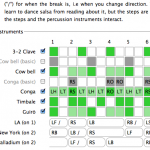
One community-shared interactive rhythm player (linked in the original post) is a great example of how tech can help dancers isolate instrument patterns and understand repetition structures.
This type of tool is ideal for beginners who learn visually and analytically.
Final takeaway
You do not need "natural rhythm" to succeed in salsa. You need repeated listening with structure. Train your ear the same way you train footwork: small sessions, consistent reps, clear focus.
Once the beat becomes predictable, everything else in salsa gets easier.