Learn Musicality for Latin Dancing: Practical Ways To Hear and Dance the Music
Most dancers learn moves before they learn music. That is normal. But at some point, progress slows unless musicality catches up.
Musicality in salsa is not about doing random accents. It is about making movement decisions that match what the orchestra is actually doing.

Why instrument awareness changes your dancing
When you can hear instrument layers, you stop dancing on autopilot.
You start noticing:
- where energy rises,
- where phrasing resolves,
- when to simplify,
- when to expand movement.
That shift makes your dancing look intentional.
Start with these three musical anchors
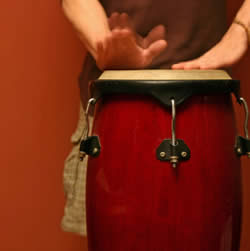
- Conga patterns for groove and pulse feeling.
- Cowbell/mambo sections for energy transition awareness.
- Clave orientation for deeper structural understanding.
You do not need to master all at once. Build progressively.
A simple musicality practice loop
- Listen to one song without dancing.
- Identify one repeating rhythm element.
- Dance basic and one simple pattern only.
- Add one musical accent on purpose.
- Repeat with a second song.
This is more effective than trying to "freestyle everything" immediately.
Beginner FAQ
“Do I need to play percussion to develop musicality?”
No. Playing percussion helps, but active listening and repeated rhythm drills are enough to create major improvement.
“How long does it take to feel real change?”
With daily listening and weekly social application, many dancers notice clearer phrasing awareness within a few weeks.
“What should I stop doing?”
Stop filling every measure with movement. Musicality often improves most when dancers learn where not to move.
Suggested weekly musicality homework
- Choose two salsa tracks and map basic phrase changes.
- Mark one section where percussion dominates.
- Dance basics only through the full song once.
- Repeat with one intentional accent phrase.
This structure trains both restraint and expression, which is exactly what social musicality requires.
Resource note
The original post highlighted a useful early educational blog focused on musical notation, instrument function, and practical rhythm understanding.
Even if some links evolve over time, the strategy remains solid: dancers improve faster when they study music fundamentals.
Final takeaway
Learning salsa musicality does not require conservatory training. It requires consistent listening with clear focus.
Once you hear more, you force less. And when you force less, your dance quality goes up fast.