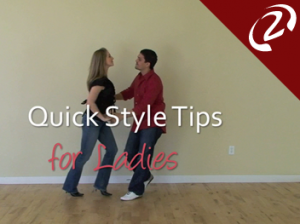
Quick Salsa Styling Tips for Ladies: Look Better While You Keep Learning
Many followers ask the same question: "How can I look better right now while I am still improving technically?"
Great question. Styling is not fake polish. It is visible body organization, and you can improve it immediately.

Five styling anchors that work fast
1) Chin up
A lifted chin communicates confidence and helps partner connection through visual engagement.
2) Shoulders back, chest available
This creates better posture, improves movement readiness, and prevents the "collapsed beginner" look.
3) Clean arm and hand tone
In closed position, keep light responsive contact. No hanging on the lead. Lightness plus intention looks elegant and improves follow speed.
4) Soft knees and ball-of-foot readiness
This instantly improves fluidity, hip action, and reaction time. Locked knees make movement look heavy.
5) Use your facial expression intentionally
A relaxed smile can reset awkward moments and improve partner comfort. Expression is part of dance communication.
Styling deep dive: what each anchor changes
Chin position and partner connection
When chin drops, dancers often lose both visual confidence and spatial awareness. Keeping chin gently lifted improves how you see floor traffic and how you communicate with your partner.
Shoulder alignment and movement range
Rounded shoulders reduce chest and upper-back mobility, which limits styling options. Open alignment creates cleaner lines for body movement and shimmies.
Arm tone and follow quality
Followers often hear, “don’t hang on the lead,” but the practical translation is this: keep enough tone to stay responsive, but not so much tension that the lead feels blocked.
Knee flexion and fluidity
Soft knees are one of the fastest visible upgrades in social dance quality. They create smoother transitions, better balance recovery, and more natural hip action.
Facial expression and social trust
Dancing is social communication. A neutral or warm expression can make your partner feel comfortable, while obvious frustration can shut down connection even if your technique is good.
Common styling mistakes (and fixes)
Mistake: overstyling every count
Fix: choose one or two intentional styling moments per phrase.
Mistake: styling that breaks timing
Fix: if a styling idea costs your rhythm, reduce complexity and rebuild.
Mistake: disconnected arm movement
Fix: let arm styling originate from body pathway, not isolated random gestures.
Mistake: copying advanced styling too early
Fix: adapt ideas to your current balance and timing level before full-speed social use.
Practice sequence for followers (15 minutes)
- 3 minutes: posture and chin/shoulder alignment checks.
- 4 minutes: basic step with soft knees and ball-of-foot engagement.
- 4 minutes: arm/hand styling with minimal footwork.
- 4 minutes: integrate all elements on music at moderate tempo.
Repeat consistently and styling starts to look natural instead of forced.
Leader perspective: why this helps both partners
Well-organized follower styling often makes leading easier because timing and frame remain predictable. That creates better shared musicality and less correction pressure for both dancers.
Social-floor mindset
Styling should support communication, not compete with it. If you feel overwhelmed in a dance, return to fundamentals:
- chin up,
- shoulders open,
- knees soft,
- breathe,
- smile,
- listen to the music.
That reset works in almost every scenario.
Styling by song energy: a practical framework
Not every track wants the same visual energy. One way to avoid over- or under-styling is to map your choices to song texture.
For smoother romantic tracks
- longer lines,
- softer arm pathways,
- measured expression,
- fewer abrupt accents.
For punchier salsa dura moments
- clearer rhythmic accents,
- sharper but controlled directional styling,
- stronger pause usage.
For cha-cha sections
- compact timing clarity,
- playful hand styling,
- cleaner syncopation emphasis.
Matching styling to song type makes you look more musical immediately.
Partner-respect styling rules
Followers can style beautifully without making leading difficult. Keep these guardrails:
- avoid styling that blocks incoming lead signals,
- re-center quickly after free styling moments,
- maintain awareness of available hand connection points,
- keep movement size appropriate for floor density.
Elegant styling is compatible with clear follow technique.
Video review checklist for faster styling growth
Record one social song and evaluate only these items:
- Is chin consistently lifted?
- Are shoulders organized or collapsing?
- Are arms intentional or drifting?
- Are knees soft throughout or only at start?
- Does expression match musical mood?
This review method prevents vague self-criticism and gives actionable corrections.
Weekly micro-goals for followers
Choose one weekly styling focus:
- Week A: posture and visual confidence.
- Week B: hand and arm pathways.
- Week C: hip action and knee softness.
- Week D: expression and musical phrasing.
Layering one theme at a time is more sustainable than trying to “fix everything” in one night.
Final confidence note
You do not need to be “advanced” to look polished. Consistent fundamentals plus intentional styling habits can make even simple dances look elegant. That combination is often what gets followers remembered as musical, enjoyable partners in any social scene. Keep the styling honest, musical, and connected, and your dance presence will keep improving even before your hardest patterns do. When in doubt, reduce complexity and return to posture, timing, and expression. Those three elements scale from beginner social dancing all the way to advanced floor presence. Always.
Why this matters for learning speed
Good styling habits are not separate from technique. They reinforce balance, connection, and movement clarity while you learn patterns.
So yes, you can "look better now" and still be a developing dancer.
Final takeaway
When technique feels overloaded, return to these five anchors. They keep your dancing presentable, musical, and partner-friendly while your deeper skill set continues to grow.