
The Key Ingredients to Smooth Salsa Dance Spins
Erika Briones is a San Diego salsa dancer and contributor to Addicted2Salsa. The technical perspective below is adapted and expanded for practical training use.
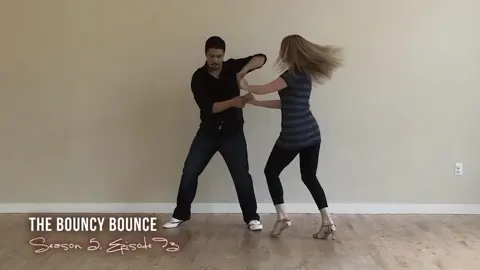
Smooth salsa spins are one of the most requested skills in social dancing, and also one of the most misunderstood.
Many dancers think multiple spins are mainly about "turning faster." In reality, good salsa spins are a systems problem: alignment, prep, timing, connection, and recovery.
If one piece fails, the whole sequence feels unstable.

Why spins break down
The most common causes are:
- rushed prep
- weak axis control
- inconsistent spotting
- overpowered lead input
- poor exit timing
The fix is not more force. The fix is cleaner mechanics.
Core principle: prep predicts outcome
A strong spin starts before the turn starts.
During prep, follows should organize posture and weight so the body is ready to rotate on one clear axis. Leads should communicate spin intention early through stable frame and readable hand path.
If prep is vague, spins become guesswork.
The five technical pillars for smoother salsa spins
1) Structured prep and weight organization
Keep posture stacked: head over ribs, ribs over hips, hips over standing leg. Engage core lightly and keep knees soft.
Your body should feel centered before rotation begins, not mid-spin.
2) Leg line and base control
Legs should stay organized and compact during rotation. Wild leg movement creates drifting and wobble.
For developing dancers, controlled "tap" training can help establish rhythm before removing taps for cleaner multi-spin technique.
3) Arm structure and frame clarity
A stable arm position helps maintain rotational consistency. Think firm but not rigid.
Leads should avoid yanking. Follows should avoid "spaghetti arm" collapse. Clear frame improves both balance and communication.
4) Core engagement and full-body connection
Tight does not mean tense. It means connected.
Light abdominal engagement and grounded foot pressure improve rotational efficiency and reduce energy leaks. This is why dancers with similar strength can have very different spin quality.
5) Spotting and head discipline
Spotting reduces dizziness and improves directional consistency. Choose a visual point, delay head turn, and return quickly to the same target.
Spotting quality is often the difference between one clean spin and three clean spins.
Role-specific reminders
For follows
- Own your axis.
- Do not dump weight into the lead.
- Finish turns with control, not panic stops.
For leads
- Initiate clearly.
- Maintain consistent circular guidance.
- Match spin request to partner readiness.
Great leads make spinning easier. Great follows make spinning stable.
Drills that actually help
- Single-spin stop drill on count.
- Double-spin drill with same prep each rep.
- Spotting drill with fixed visual target.
- Exit-to-basic drill to restore timing quickly.
- Partner drill with progressive lead intensity.
Repeat slowly before increasing speed.
Common mistakes to remove immediately
- Throwing your upper body into turns.
- Looking down during rotation.
- Overusing shoulder tension.
- Forcing one more spin after losing axis.
- Ignoring musical timing on exits.
A clean double on time looks better than a messy triple off phrase.
Musicality and spins
Spins should serve the music, not interrupt it. Use phrase accents, breaks, and vocal holds to decide when to spin and when to stay grounded.
This is where salsa dancing becomes expressive instead of purely technical.
Lead-follow timing details that improve turns immediately
One reason spins feel inconsistent at socials is that both partners are often right for class, but slightly early or late for live music conditions.
Use these timing corrections:
- Leads: signal intention one beat earlier than you think.
- Follows: complete prep and collect before trying to accelerate.
- Both: prioritize clean finish on count before adding an extra revolution.
If your social spins feel rushed, the issue is usually communication timing, not raw spinning ability.
A 4-week spin progression plan
If you want tangible results, train progressively instead of random repetition.
Week 1: axis and stop quality
- 3 sets of single spins, both directions.
- Hold each finish for one full count without wobble.
- Track whether you can return to basic immediately.
Target: clean single spins with stable recovery.
Week 2: doubles with fixed prep
- Keep prep identical every repetition.
- No extra arm force.
- Record 5 reps and review drift distance.
Target: doubles that finish in place, not traveling.
Week 3: musical entries and exits
- Enter on phrase accents.
- Exit into simple basics on time.
- Add one partner drill with moderate lead input.
Target: turns that look and feel connected to music, not isolated tricks.
Week 4: social transfer
- Practice in crowded-floor spacing.
- Reduce turn count and improve clarity.
- Use doubles only when connection is clear.
Target: dependable social spins under real conditions.
Floorcraft and safety during multiple spins
Great spinners are also safe social dancers.
Before initiating multi-turn patterns, quickly check:
- available space behind the follow,
- neighboring couples' travel direction,
- floor friction at your current spot.
If spacing is tight, choose a compact single-spin variation. Stylish control beats risky complexity every time.
Technique cues for leaders and followers at different levels
Beginner follows
- Keep weight centered over standing leg.
- Avoid leaning into the lead during prep.
- Use one clear visual spot target per spin.
Intermediate follows
- Refine arm path so frame stays compact.
- Reduce unnecessary shoulder movement.
- Practice clean deceleration at the end of doubles.
Beginner leads
- Lead intent with frame and timing, not brute force.
- Keep hand path circular and readable.
- Do not ask for more rotations than connection supports.
Intermediate leads
- Match turn request to partner's current axis quality.
- Adjust based on floor traction and song energy.
- Build combinations around clean exits, not max spin count.
Troubleshooting guide
Problem: you drift across the floor
Likely cause: off-axis prep or leg separation mid-rotation.
Fix: tighten collection, reduce initial force, and drill single-spin holds.
Problem: dizziness ruins the next pattern
Likely cause: inconsistent spotting and rushed breathing.
Fix: shorter spin sets, deliberate spotting drills, and phrase-based recovery.
Problem: turns feel heavy with some partners
Likely cause: mismatched frame tone or late lead signal.
Fix: earlier intent communication and softer, continuous guidance.
Problem: spin starts clean but exit is messy
Likely cause: no planned landing count.
Fix: choose exit count before initiation and train exit-to-basic drills.
Final training mindset
Smooth salsa spins are not a mystery skill reserved for a few dancers.
They are the result of repeatable mechanics plus musical timing plus partner awareness.
If you train those three consistently, your turns will become cleaner, faster, and more dependable in social dancing and performance settings.
Final takeaway
Smooth salsa spins are built, not gifted.
Dancers who spin well usually spent months or years refining prep, axis, and musical timing. If you stay consistent, your spins will improve too.
Build fundamentals first, then add speed. Speed without structure is noise.